

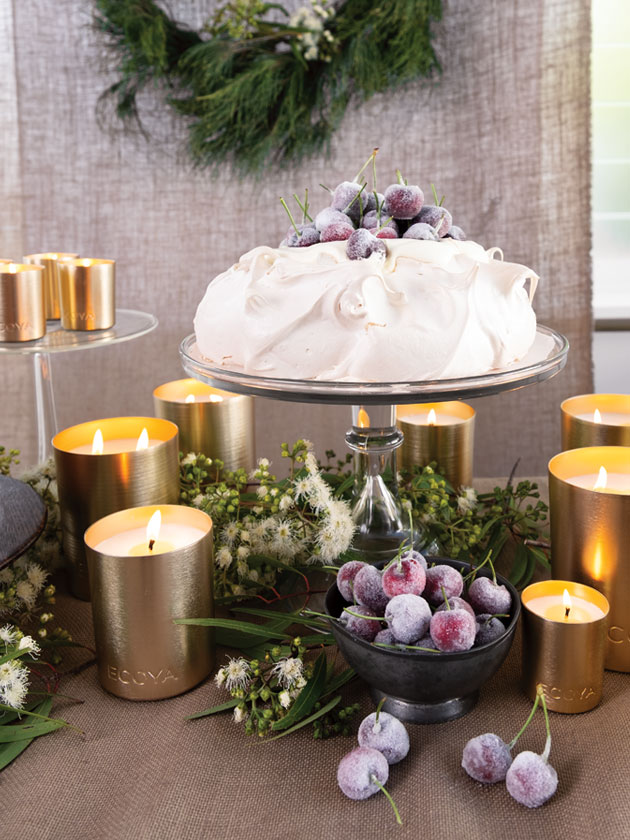
Frosted cherry pavlova
- 225ml eggwhites (about 6 eggs)+
- 1½ cups (330g) caster (superfine) sugar
- 1 tablespoon cornflour (cornstarch)
- 2 teaspoons white vinegar
vanilla whipped cream
- 1½ cups (375ml) pure (pouring) cream
- 2 teaspoons vanilla bean paste
frosted cherries
- 2 eggwhites, lightly whisked, extra
- 1½ cups (300g) caster (superfine) sugar, extra
- 500g cherries
- Preheat oven to 150°C (300°F).
- Place the eggwhites in the bowl of an electric mixer and whisk on high speed until soft peaks form.
- Add the sugar, 1 tablespoon at a time, whisking until each addition is dissolved before adding more++.
- Once all the sugar has been added, scrape down the sides of the bowl and whisk for a further 10–15 minutes or until the mixture is thick and glossy+++.
- Place the cornflour and vinegar in a small bowl and mix until smooth.
- Add the cornflour mixture to the eggwhite mixture and whisk for 30 seconds or until well combined.
- Using a pencil, draw a 20cm circle on a sheet of non-stick baking paper. Place the baking paper, pencil-side down, on a lightly greased baking tray++++.
- Spoon the meringue mixture into the circle to make a neat round. Reduce the oven temperature to 120°C (250°F) and bake for 1 hour. Allow to cool completely in the closed oven+++++.
- While the pavlova is cooling, make the sugar-coated cherries. Line a baking tray with non-stick baking paper. Place the extra eggwhites and extra sugar in separate small bowls. Dip or brush the cherries in the eggwhites and then sprinkle with the sugar to coat. Place on the prepared tray and allow to dry.
- To make the vanilla whipped cream, whisk the cream and vanilla until soft peaks form.
- To assemble, place the pavlova on a cake stand or plate and top with the vanilla whipped cream and sugared cherries to serve. Serves 8–10
+ Making meringue is a science. Be sure to measure your ingredients carefully, including the eggwhites as egg sizes do vary. Fresh, room temperature eggs work best – when whisked they’ll become fluffy and voluminous, plus they’re more stable during baking.
++ Be patient when gradually adding the sugar to the eggwhite. Each tablespoon of sugar should be dissolved before the next is added.
+++ Take care not to overwhisk the meringue mixture – it’s ready when it’s thick, glossy, smooth and there are no more sugar granules. You can check this by rubbing a little mixture between your thumb and forefinger.
++++ Turn the backing paper do it’s pencil-side down on the tray — no marks will transfer onto the meringue.
+++++ Allow the meringue to cool gradually in the oven with the door closed — preferably overnight.
TIP
It’s best to avoid making meringue on humid days. Excess humidity can cause meringue to sink during or after baking.
The beautiful Goldie candles are exclusive to ECOYA Holiday Collection - view here




 © DONNA HAY GROUP